
24V RV Battery
this is the abtou products cataglog fold content.
Golf Cart Battery
Home Residential Battery
RV battery

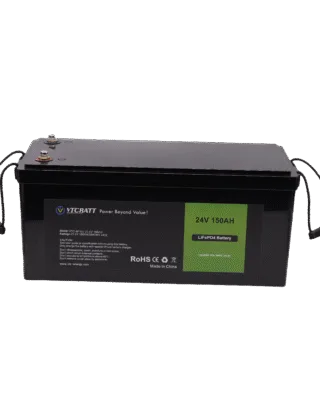
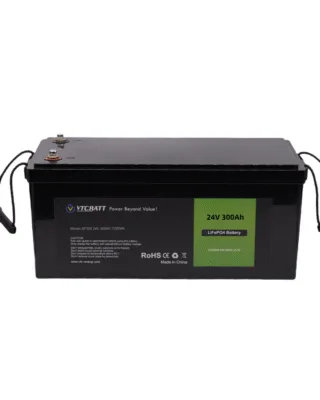
FAQs about Category: 24V RV Battery
How to charge 48V lithium golf cart batteries properly?
What storage conditions maximize 48V lithium battery lifespan?
Store the battery in a cool, dry place away from direct sunlight and extreme temperatures. If storing for long periods, keep the battery charged at around 50–70% to prevent overdischarge or overcharging.
Can 48V lithium batteries be repaired if damaged?
Repairing lithium batteries is complex and not usually recommended. Damaged batteries should be assessed by professionals. Replacing individual cells or the entire battery pack is often safer and more cost-effective.
How often should 48V lithium battery terminals be cleaned?
Clean the terminals every 3–6 months or sooner if you notice any corrosion. Use a dry cloth and a non-corrosive cleaner to remove dirt and moisture, which helps maintain good electrical contact and prolongs battery life.
How often should lithium battery terminals be cleaned?
Clean the terminals every 3–6 months or sooner if you notice any corrosion. Use a dry cloth and a non-corrosive cleaner to remove dirt and moisture, which helps maintain good electrical contact and prolongs battery life.
How often should lithium battery terminals be cleaned?
Clean the terminals every 3–6 months or sooner if you notice any corrosion. Use a dry cloth and a non-corrosive cleaner to remove dirt and moisture, which helps maintain good electrical contact and prolongs battery life.
How often should 48V lithium battery terminals be cleaned?
Clean the terminals every 3–6 months or sooner if you notice any corrosion. Use a dry cloth and a non-corrosive cleaner to remove dirt and moisture, which helps maintain good electrical contact and prolongs battery life.
What information do you need to design a custom battery?
To design a custom lithium battery pack, we normally need the following basic parameters:
-
Nominal voltage & capacity
-
Maximum continuous/discharge current
-
Battery dimensions or the available space in your device
-
Application working temperature
-
Charging method (charger specs or onboard charging system)
-
Required certifications (UN38.3, MSDS, IEC62133, UL, etc.)
Providing this information helps us propose a suitable cell type, BMS solution, and mechanical structure more accurately and efficiently.
What is your typical lead time for custom battery development?
For sample development, the lead time is usually 7–15 days, depending on the complexity of the battery pack and BMS design.
For mass production, it generally takes 20–35 days after sample approval.
Complex packs with smart BMS, Bluetooth monitoring, CAN/SMBus communication, or CNC metal housings may require additional development time.
Do you have a minimum order quantity (MOQ) for custom batteries?
Yes, the MOQ for custom lithium battery packs is usually 100–500 units, depending on the cell type, pack structure, and customization level.
For special cells or metal/plastic housings that require custom tooling, the MOQ may be higher.
We also support small-volume prototype orders to help customers test their projects before mass production.
What certifications can you provide for custom battery packs?
We can support all major battery certifications, including:
-
UN38.3 (required for air shipment)
-
MSDS
-
IEC62133
-
UL2054 / UL1642
-
CE / RoHS
For large-volume custom projects, we can assist with third-party testing and certification according to your target market requirements.

